Everyone wants to talk about the hard parts of working in veterinary medicine. The euthanasia. The heartbreak. The animals we couldn’t save. The clients who scream at us because costs are too high and their pet is ill and they need someone, anyone, to take the blame.
And yes—those things are VERY REAL. They HURT. And they HAUNT US. For a lot longer then anyone truly realizes.
But what people fail to bring up often enough—what I’m here to talk about here and now—is what did actually break me while working in vet med.
And I can assure you, it wasn’t the heart wrenching cases–though they sure did stick with me for eons. It wasn’t having to be a part of end of life proceedings or having to deal with the aftermath. It wasn’t even the occasional rude client coming in like a hurricane and running their mouth.
No, what actually did me in was the downright toxic management teams and overall environment this field seemed to foster.
Don’t get me wrong, I still love the career and dream of returning someday. Despite everything—the panic attacks, the C-PTSD, the betrayal, the lies and subsequent forced isolation—I still want to go back. It’s my calling, my passion. I know deep inside the work itself didn’t destroy me.
Management did.
And sadly, I’m not the only one.
*~*~*~*~*~*~*~*~*~*~*~**~*~*~*~*~*~*~*~*~*~*~**~*~*~*~*~*~*~*~*~*~*~*
What Vet Med Actually IS
Thinking back over the course of the last decade+, the joy was plentiful.
It was watching an animal with a severed limb walk again. It was hand-raising an orphaned litter of kittens or delivering a litter of puppies via emergency c-section—resuscitating every single one and listening to their little squeaks and cries as they came to life in your hands.
It was that cat the police officer found on the side of the road, clearly tossed from a car, head trauma so severe he couldn’t see, could barely stand straight, much less walk.
It was watching him improve day by day. Witnessing him regain his mobility, seeing as his vision returned bit by bit. Getting to be a part of the rebirth of a once abused animal, now a happy, frolicking cat with the goofiest wide-eyed expression on his face.
It was helping him find a forever home with an amazing woman who updates you regularly on how he’s doing. Being called Auntie Dani simply because someones grateful to you for saving their new pets life.
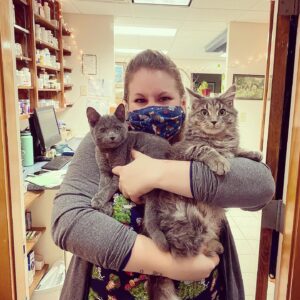
It’s getting those updates. All of them. The thank you cards. The hugs. The tears from people who trust you with their furry family member.
It’s every single wet nose and head bump. The purrs. The wiggle butts as patients leave to go home—or better yet, when they return and are actually HAPPY to see you.
It’s when clients request you by name because you’re their favorite tech. The one they trust the most. The only one their pet trusts and loves the most too.
It’s that feeling when you finally go home at night—exhausted; physically and mentally destroyed—BUT feeling ACCOMPLISHED. Excited to tell all the stories. Phone overflowing with hundreds of pictures of all your beloved patients. The before and after photos. Pictures of strays learning to trust and love. Wounds and surgeries pre and post. The “Glow Ups”. Puppies and Kittens as they become adults.
All of it is more than enough to fuel a life.
I ADORED that work. Was PROUD of it. I didn’t want to do anything else.
*~*~*~*~*~*~*~*~*~*~*~**~*~*~*~*~*~*~*~*~*~*~**~*~*~*~*~*~*~*~*~*~*~*
The Myth vs The Reality
Some of you may have heard of the “Not One More Vet” movement–they are a great initiative who are spreading awareness on the high suicide rates and mental health issues that often plague the field of veterinary medicine. One of their most commonly talked about topics is client behavior. And what can I say? They’re not wrong—clients CAN be awful. No offense.
But I’ll be blunt. We’ve had clients throw food at us. Scream that we’re murderers because their pet needs lifesaving surgery and the cost is too exorbitant. Demand we perform miracles we simply can’t perform. Rage at us because their pet passed and they felt it’s our fault. Say we’re only in it for the money, that we’re greedy, selfish, don’t care about the lives of animals period. If they only knew what we really made on a yearly basis they’d cringe. If they only knew how deep those words cut and how much we bleed at hearing them.
And the majority of us take it all to heart and hold it close. Some of us cry. Some of us never forget. Some of us it plagues forever. So of course it’s valid to talk about.
But here’s what rarely gets said:
The stress from clients wouldn’t be nearly as bad if those in charge whether it be supervisors, management, practice owners, corporate heads, or perhaps even a doctor in charge, weren’t actively making it worse.
Because when a client is cruel, you process it. You vent. You decompress with coworkers who GET IT. You come back the next day because the WORK matters.
But when management IS the problem? You can’t turn it off. It’s in every shift, every interaction, every decision. It poisons the whole thing from the inside.
And what’s worse? You’re expected to cater to the abuse rather than be protected and shielded from it. No one is in your corner—rather you’re forced into one. You can’t escape it. You can’t even utter a word about it without risk of retaliation.
So yes—I will always implore all individuals to be kind to their veterinary staff. Thats absolutely critical. Be kind to anyone honestly. We need more of that in the world.
And to everyone within the field, we should always continue to advocate for client behavior to change. Zero tolerance policies are a thing and always should be.
BUT stop using clients as the shield for a much larger issue. Stop pretending the crisis is merely coming from outside the clinic when in reality it’s coming from the inside too.
*~*~*~*~*~*~*~*~*~*~*~**~*~*~*~*~*~*~*~*~*~*~**~*~*~*~*~*~*~*~*~*~*~*
Behind Those Treatment Room Doors
Management abuse doesn’t announce itself. But it also isn’t invisible.
It hides behind “standards” and “professionalism” and “clinic policies.” It disguises itself as concern while systematically destroying people.
Often people can see it happening but are afraid of saying anything so instead it continues on–a vicious cycle.
I unfortunately was victim of this cycle for many many years and it took its toll.
I remember I was grieving my own foster cat being euthanized during a surgical procedure—an animal I’d cared for, loved, fought for. He was far too young, with a myriad of health issues but he’d always been the best cat. Despite everything, his getting sick was sudden and unexpected. My tears were natural. My grief was valid. My emotion was HUMAN.
Management’s response?
“You’re being too emotional. You’re distressing the doctor.”
Not: “Take a break.” Not: “We understand, that’s your foster.” Not even: “We’re so sorry for your loss.”
Just straight up: ”YOU’RE the problem. Your grief is inconvenient.” A clear as day reprimand even.
They made me the issue for having a normal human response to loss.
And that’s just ONE way it works. One experience I had. Because the abuse is systematic:
Unfair standards applied selectively.
You’re held to expectations that don’t apply to anyone else. Help a struggling coworker? Disciplined. Work through lunch or stay late to finish tasks? Get called out. Meanwhile, watch other techs coast or do the same and get rewarded. The rules bend for some people and break for others. The sad reality is the concept of “cliques” and “favoritism” doesn’t end after you graduate. It only seems to get worse in adulthood.
Surveillance and distrust.
Watched through cameras. Monitored. Questioned. Not trusted with basic autonomy while simultaneously being blamed when things fail because you weren’t trusted to do them right. Meanwhile doing a good job? Well don’t expect to hear anything about that unless you’re either really lucky, really special or do something truly spectacular.
Retaliation for speaking up.
Ask for a solution? Ignored. Suggest an alternative? You’re being “difficult.” Speak up about unfair treatment? Watch the retaliation escalate. Maybe HR needs to get involved? Oh and god forbid you go to management “too much” after being told the “door is always open”—you get met with disdain and annoyance, told your emails are never read because they’re irritating when all you’re trying to do is find a way to do your job.
Favoritism that’s blatant and demoralizing.
You watch coworkers with less experience, a cocky attitude and worse work ethic surpass you in earnings in less than a year. You never get a raise despite working your ass off. Sure you have some bad days but so do they. On an even more degrading level, everyone gets business cards after hitting 90 days. You work there three years and never get yours. You end up having to lie repeatedly to clients, using the excuse that you’re “out of stock” rather than face the humiliation of admitting management simply won’t order you any.
*~*~*~*~*~*~*~*~*~*~*~**~*~*~*~*~*~*~*~*~*~*~**~*~*~*~*~*~*~*~*~*~*~*
The Cost
In the larger scheme of things, this toxicity doesn’t just hurt staff (and egos). It destroys lives. It shatters families. And it even kills animals.
No I’m not being dramatic. I know because that is exactly what happened to to me and my life.
I had taken some time off after my guinea pigs had surgery. Post-operative care was critical. The little guys are risky anesthesia candidates.
My boss talked me into working the next day anyway.
One of my piggies had a complication.
Of course.
I brought him into work with me where the vet could treat him. The doctor gave me clear instructions for critical care. Specific. Important. Potentially life-saving instructions.
As I was rushing around gathering supplies to administer said treatments, my boss stopped me and made me put him in a kennel to tend to appointments instead. I was panicked but she was stern and adamant so I had to do as I was told.
Later on, I was pulled out of an appointment because the vet found my pig dead while trying to do the treatments I was supposed to be doing. I. knew before anyone even said a word—because when you neglect something thats critically ill that’s what happens.
My boss told me to take as long as I needed to grieve, gave me saccharine sympathy as if SHE wasn’t the one who made me neglect him in the first place. I saw red.
I had him cremated—but no one ever told me when his ashes returned and I never even received a sympathy card like my other coworkers had when their pets passed. Even my old clinic had gone out of their way to send me a card with personal notes from everyone. But not my work. Not where my piggy had passed away.
Then again, should I have been surprised?—they hadn’t even sent me a get well soon card after I’d had abdominal surgery and no one checked on me once while I was out for two months.
Regardless, it still left a bad taste in my mouth. To receive zero acknowledgment. That there was zero accountability. That it was treated as if nothing ever happened. Like my guinea pigs life didn’t matter. Like it would have happened anyway. When truthfully there was no way to really know.
The reality was my guinea pig died because of toxic supervisors forcing me to neglect him. Because his care didn’t matter and got pushed aside over paying clients. And sadly, no one gave a shit.
As time went on and the pressure management put on me continued, it caused breaks that gradually began to show. Unsurprisingly their response wasn’t support.
It was warfare.
What was originally normal anxiety turned into anxiety with panic disorder which then became visible through physical panic attacks—all thanks to the work conditions THEY created and abuse they put me through for years. Instead of helping like they pretended to do–said they wanted to do–and at the end of it al they went and made it even worse.

They called my parents and LIED so they could get rid of something now useless and broken.
They told them I was suicidal. Said I was a danger to myself. Used my panic disorder—the one they caused—as a weapon to force me out of my job, out of my career, out of my LIFE.
I was not involved in this conversation. I was at my apartment completely unaware of what was happening. The call I recieved from my sobbing mother and father telling me they were on their way to fetch me was an utter shock.
In the end I was isolated. Cut off from my support system. Forced to move home with my parents to rural Maine where I had no community, no work, no way forward. My mental health spiraled and I became unemployable, physically sick because I was mentally sick.
Management didn’t just break me.
They destroyed my entire life and called it concern.
This is what happens when management chooses control over people. When they weaponize mental illness instead of supporting it. When accountability becomes impossible and retaliation becomes policy.
And I’m not alone. This is EVERYWHERE. This IS vet med.
*~*~*~*~*~*~*~*~*~*~*~**~*~*~*~*~*~*~*~*~*~*~**~*~*~*~*~*~*~*~*~*~*~*
This Is A Choice
Management likes to talk about change and offering support.
Meetings. Statements. Wellness initiatives. Mental health awareness programs.
Meanwhile the toxicity continues unabated.
But real change—actual, meaningful change—requires something they’re not willing to do:
It requires paying people fairly. It costs money. Money they’d rather keep.
It requires applying standards equally. Being fair. It requires listening when people ask for help. It requires humility. It requires treating staff like humans instead of resources.
It means stopping the gaslighting. It means recognizing abuse for what it is instead of hiding behind “clinic culture” or “high standards.”
And it means supporting people through crisis instead of tearing them down and adding pressure. Having a conscience. Choosing people over control.
But that would also mean saying they’ve been wrong, apologizing, making amends.
Admitting they’ve hurt people and ruined lives. It would mean being held accountable, admitting fault and admitting they’ve destroyed people.
Admitting that control matters more to them than conscience.
And they won’t do that. Why would they?
It’s easier to blame clients.
It’s easier to blame the emotional nature of the work.
It’s easier to blame YOU and ME.
It’s an active choice.
Management is CHOOSING this. Every single day.
But it can just as easily be UNCHOSEN.
*~*~*~*~*~*~*~*~*~*~*~**~*~*~*~*~*~*~*~*~*~*~**~*~*~*~*~*~*~*~*~*~*~*
To The Field
To other vet professionals reading this:
You’re not crazy. You’re not too sensitive. You’re not weak. You’re not the problem.
Your workplace IS.
If you’re breaking under the weight of managerial toxicity, that’s not a personal failure. That’s a system designed to break you.
To anyone in management, all practice owners, and of course corporate veterinary chains:
Your staff isn’t just leaving. They’re being DESTROYED. Forced out. Cut off. Isolated. And some don’t come back. EVER.
Some take their own lives because you made them believe that was the only escape.
You are directly responsible for that. Accountability starts now.
I was NEVER suicidal until I was forced from my career and the life I’d built over two decades. Until I was sent to live isolated far from everything and everyone I’d ever known and loved.
The lie my bosses claimed became a self fulfilling prophecy—and I doubt they even cared. That’s honestly the saddest part of this for me.
To everyone in this field:
It’s time to stop protecting abusers. Stop normalizing abuse. Stop accepting “that’s just how it is in vet med.”
It doesn’t have to be.
Because I love the veterinary profession. I love what we DO. I love the animals, the healing, the mercy, the JOY.
But I can’t come back. I WON’T come back.
Not until it’s safe.
Not until management and practice owners decide that staff matter more than control.
Not until they’re held accountable for the lives they destroy.
Not until the field stops protecting the ones doing the abusing and starts protecting us FROM the abusers instead—starts protecting us from toxic management.
That’s the change that matters.
That’s what needs to happen.
And it starts with all of us refusing to accept it anymore.